The Failed Expedition of Francisco Hernandez de Cordoba

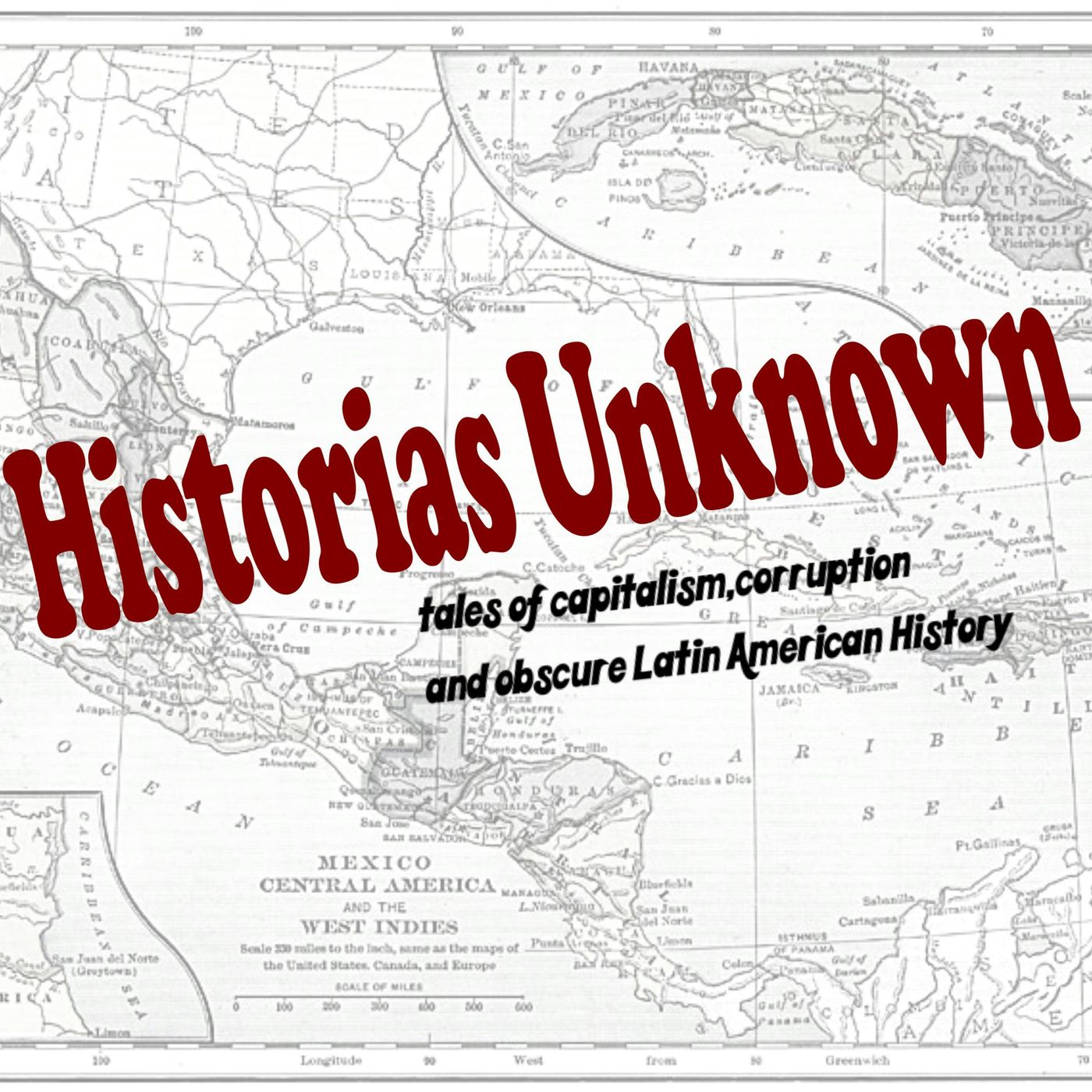
Francisco Hernandez de Cordoba was the captain of an expedition that left Castilla del oro (Cuba) in 1517, with the intent of finding more indigenous people to enslave. But none of it went as planned.
Cristina tells Carmen about this failed...

 Spotify

 Apple Podcasts

 RSS Feed

 Amazon Music

 Audible

 PlayerFM

 Podcast Addict

 PocketCasts
Francisco Hernandez de Cordoba was the captain of an expedition that left Castilla del oro (Cuba) in 1517, with the intent of finding more indigenous people to enslave. But none of it went as planned.
Cristina tells Carmen about this failed expedition and the victory of the Maya, who drove the Spaniards out during their battle.
If you have topic suggestions, feel free to email Historiasunknownpodcast@gmail.com or use the contact us form on the website https://www.historiasunknown.com/contact/
Want ad free episodes? And the ocassioal bonus episode? Support Historias Unknown on Patreon https://www.patreon.com/HistoriasUnknownPodcast
Follow on social media:
Instagram: https://www.instagram.com/historiasunknown/
Threads: https://www.threads.net/@historiasunknown
Music Credit: Hustlin (Instrumental) by Neffex
Sources:
https://en.m.wikipedia.org/wiki/Francisco_Hern%C3%A1ndez_de_C%C3%B3rdoba_(Yucat%C3%A1n_conquistador)
https://en.m.wikipedia.org/w/index.php?title=Hern%C3%A1ndez_de_C%C3%B3rdoba_expedition&wprov=rarw1
https://en.m.wikipedia.org/wiki/Lucayan_Archipelago
https://en.m.wikipedia.org/wiki/Cape_San_Antonio,_Cuba
https://web.archive.org/web/20060427121141/
http://www.mexicodesconocido.com.mx/espanol/historia/colonia/detalle.cfm?idpag=4166&idsec=2&idsub=13
Become a supporter of this podcast: https://www.spreaker.com/podcast/historias-unknown--6253658/support.
0:09 Hi everyone. This is Carmen and Christina and this is Estoria's Unknown, a podcaster. We talk about Latin American history. Sometimes it's horrible and deals with tybe topics like racism, corruption, and genocide. But more than that, it's also about resistance, power and community. And today is about resistance and power. Woho and colonization. Okay, okay, I'm ready. Yeah. So when we learn about the colonization of the Americas, and I'm using that in quotations quote quote yeah, quote quote, it's always with the words of conquest and the conquistalles or the conquistadors. But as you know, not here, not in this house, in this podcast. Yes, today I'm telling you the story of one colonizer and has failed attempt at the colonization of Yucatan. Okay, I love a feled attempt, I know, I love a failure. I'm calling this Francisco Ernandez, failed colonizer. And yes, it's a behind the bastos, because any colonizer is automatically as a failed basto, a loser, if you will, loser. So there's not a lot of info out there on him specifically, so like really, really, it's not a behind the because that's like a deep dive into a person and the horrible things they did. Right, and this is like the only thing out there about
1:39 him is that he was Spanish. He was a conquistello slash colonizer, and he put together this failed expedition and that's literally all really, So other than him being from Cordoba and the Luisa esp Espanya, that's really all there is. Ispana. He was part of a group of colonizers that colonized Cuba, and he was a rich enslaver in Cuba, which I think they had another name for it, but I was like whatever, I'm not calling it that, Like, the Spanish had another name for Guba. Yeah, originally it was called something else. You know how they had like long ass names for everything. Yeah, So that's what he was, a rich enslaver. And in fifteen sixteen, he, together with another two very rich enslavers, decided to put together an expedition known today as the Dnandez de Cordoba Expedition, the Failure of an expedition. So each of these three enslavers slash colonizers contributed one thy five hundred to two thousand castellanos for this voyage and it was supposed to go to the Lukeyan Archipelago. The hell is that this is a group of islands. Oh I say, I'm like, I know, it's like a place I think, but I didn't realize. Okay, Yeah, so it's made up of the Bahamas, Turks and Turks and Caicos and then the north of Cuba. It's that
3:11 set of islands, Okay. And this expedition had one sole purpose, can you guess, to find go to capture and slave more people. I probably should have realized that. Let's pretend I knew that all along. I mean, it was gonna be one of two. You were half like I was gonna say, to find to find what mermaids the local population of the now colonized Cuba this and I think we all know this by now. But the indigenous people were enslaved first, and then you know, eventually they had to bring in Africans. And this is the start of the what is it called the North North Transatlantic transatlantic Yeah, yeah, slave trade where they trafficked people to enslave them, like the Spanish literally started it. And it was because they were killing off the indigenous population and they needed more people to enslave. So this was already happening. They had just been in Cuba for three years and the indigenous population they were dying in great numbers due to either the violence of the colonizers or their diseases. So they the Spanish, needed more people to enslave, and with the blessing of the crown, through Diego of Alaska's the Quayad, who also contributed a ship, they had approval, they had
4:41 the permission to do this. He was the so they go of Alaska Zaquayad was the appointed first governor of Cuba and he led the first expedition that got them there. So that's who he is, and so he gave them permission to do more of this because he's like, well where we to hear and we need more enslaved people, so let's do it. So Francis Francis gordanaz Cordova was named the captain and by the time they were ready to go, they had a crew of sailors, soldiers, a chaplain of notary enslaved Cubans, three ships and provisions. The main pilots so you know, the person driving the ship if you will, what they call it pilot, and all those sorts of captain because the captain was Francisco and oh, okay, so I think he has the title of captain because he's in charge of the whole thing and then each person.
5:39 And again, I know driving is the wrong word, but like sailing, they're sailing. Yeah. So the main pilot was Anton Almos and he had been on a voyage with another famous colonizer, Christopher Columbus. Yes, how did you know, Lucky? Yes? Okay, wow. And then the pilots of the other two ships were Juan Alvarez and Cacho Triana. That sounds like a fake name, right, And most of the crew had been Oh this is the name. So most of the crew had been in Castilla del Oro. This is what they're calling. Oh, they called Cuba Castillo de Oro. Yes, interesting, Castilla Delro Castilla.
6:27 So most of the crew had been in Castilla de Loro for three years, and they were complaining that none of them had done anything worth telling. Okay, like what do they mean by that? Good? That means you're not working havoc. Yeah, And honestly, there's nothing more dangerous than a board colonizer, right, I'm thinking of It really came to like a board, ninety year old overseas in the military, who you know, Like, I don't know the same thing. Violence is bordering in there, yeah yeah, harboring, Yeah, harboring, that's the right word. So there is debate on the exact time of departure from Cuba. They're barely leaving, they haven't done anything yet, but they want a story worth telling, Okay, So there's debate on the exact time of the departure.
7:14 Some sources say February fifteen, seventeen, others say February eighth, specifically of that year. But they left Havana and they went along the Cuban coast up to Gapez and Antone, and again I was like, what are these names? Because we can encounter this in the Spookitales episode that's going to come out where I was like, what's a gaye? So a gap? It is a coastal landform that is high then has a sheer drop that extends into a body of water that is characterized by high breaking waves and rocky shores. It turned out halfway. I don't know if that is God. So like there's like a steep clip cliff, yeah yeah, in shorts, Yes, intummation, yes, and so from this Gape san Antone, then they went out to sea, and now they're not in the coast of Cuba anymore. They're out in the elements. And so this is possibly the twentieth and or twenty first of furbigory.
8:12 Now and this is where things get even murkier. Some people say they had a fixed and planned route that was just supposed to take them basically on the other side of like Cuba, the edges where they hadn't been yet, or like other nearby islands where they were looking for locals to enslave. Others say they didn't ever have like a planned route, but most likely that was their destination, not where they ended up. So then there was a storm that blew them off course. Others say it was in a storm but strong currents. Others say that the ship there was never a storm that steered them off course. They purposely went somewhere else, okay. So no stories, okay, conflicting stories. Point is they ended up somewhere else than where they intended to be, Yukatan, okay. So they were trying to get to the other side of Kuba and they ended up in Yukatan Yukatan. Yes, yeah, okay, and they were either either this was intentional or they were veered that way by a storm something happened. So then again things don't there's not there's different stories here, but they either all this is either taking place over a course of four days, six days, twenty one days, or even up to forty like wow, that many different accounts and none can be like verified for sure. Okay. But at some point early March, this expedition made it to the Yukatan Peninsula accidentally or intentionally, when that's how the
9:42 story goes. And so again, like so many other things about this whole tail, it's also contested what their first stop was. Some sources say a place called Kape, others say Punta the Yukata or Punta muherrees, but most historians land that at the consensus that it's Kape where they landed. And so you know, they're not supposed to be here. They've been rerided from their original voyage, and so they spotted some land and docked because they needed to recollect themselves, gathered supplies and shit, right, so they land dock whatever their ships and so from their ships six miles in land, they can see a large town. And up to this point in the colonization of the Americas, they had not encountered a city this big, at least this group hadn't.
10:40 So they were like, wow, what's that They named a great guitle That's not what it was, So it was already a place. Yeah, So they decided to go take a look at this quote unquote new discovery. And the most agreed upon dates of them meeting with the indigenous Maya of this region is March fourth, fifteen seventeen. So as they're thinking we should go check out that large city, it looks amazing, they're approached by indigenous Maya in these canoes called pirogus and so there's ten canoes of them and I think it's kau canoe. Oh thanks, And it's one of those words there's fucking you and there. How am I supposed to know that? I only know that because I think one time we were like looking at a canoe or kayak to use, and then we went to like Taho and then yeah, I'm pretty sure it's okay, Okay, Well they're approached by ten canoes. Okay, that sounds right. Yeah. Yeah, And this first encounter with the Maya on these canoes is peaceful. They exchanged green beads and gifts and stuff, and allegedly this is where the name Yukatan comes from.
11:51 So the Spanish asked the Maya what is this land, and the Maya were answering, I don't understand you, and the Spanish heard yukatan and then like otan. Really they were most likely saying, our house is our homeland. Oh probably yeah. There's another book called the History of the Indians of New Spain written in fifteen forty one by Frey Couribio Benavente, and he wrote the following, because speaking with those engines of that coast, to that which the Spaniards asked, the Indians responded, tank tatan, which means I don't understand you. I don't understand you. The Christians corrupted the word and not understanding what the Indians meant, said Yukatan is the name of the land. And the same happened with the kape by the land they are, which they named Kape of Koto, and Koto in that language means house. There's yet another version. Again, so many different versions, because the Spanish they don't know what they're doing. They only know one thing, and that's violence. That's something to colonize. Yeah, Francisco Lopeze Gomara, he wrote that the Maya were saying yogatan, which means language, and so they weren't saying this is Yugatan.
13:10 They were saying Yogatan, like do you speak Yogatan maybe, and so either way, the Spanish didn't know what the Maya were saying, and they were like, this is Yugatan and that's how things went down, and it's Yugatan today, right, And they were just going around they mean things whatever they wanted. Of course, the Spanish were allowed to go check out the city and they were amazed at what they were seeing. The pyramids, the temples, the golden ornaments that the people were wearing. These were all things that they had not seen before. And at this point of the journey they considered going back to Gouga to return with a stronger fleet to find gold because of the people who were wearing gold, then it's coming from somewhere.
13:56 But instead curiosity got the best of them and they like, we're going to explore more in hope to finding more gold themselves instead of coming back with more people. So from here this peaceful encounter they had with the people here. They went back to their ships and they headed south. Instead of like re routing back to where they were supposed to originally go, they were like, let's keep exploring this area. So they headed south and again, so many contradicting stories, but there's another account of what actually happened here in this first encounter with them. So others say, some say, what I just said, that's what happened. It was a peaceful encounter. The Spanish returned and then they headed south. Others say that there was a battle, and so this first encounter or the second, okay, the first, yeah.
14:46 So this account states that the first ten pirogus or canoes that went to meet the Spanish promised to return the next day with more things to give to the Spanish, and they did. But when they returned, the shore was full of natives and it was an ambush, and the Spanish were attacked with slings, stones, arrows, and pikes, and they were outnumbered. So they ran back to the ship, but they did manage to capitre two men who received the names Huali Nigo and Melcho Reco, who would then become their first interpreters and so like they did have these two interpreters with them, But the peaceful version of the story claims that Julia Nigo and Melcho Reco were part of the ten canoes that approached them first and just like begged them to take them to work with them. Mmm.
15:36 I feel like the truth is somewhere in the middle, but also I believe that account less same same, but they did have these two interpreters with them, So yeah, and then you know, they go back to the ships and so from this point they're moving only by day because anton de Alaminos, the main captain or the main pilot, it believe you got that was an island and that they had to like move slowly so they wouldn't miss where the island ended and they could go. But it wasn't it was it's a big, big piece of land. It's not an island. So they started running out of drinkable water because they hadn't planned for this to be this long. They were they should have already been in Cuba trying to find more people to enslave. So fifteen days after that initial encounter, they stopped near a Maya village that they called Lasarro which was actually Campetcha. Oh.
16:34 Here they were approached by more indigenous people who seemed peaceful. They let the Spanish fill up their casks and jugs with fresh water. They brought them to their village. But that's where their courtesy ended. The leader he burned some dry reeds. So you know those plants that are like they're like this tall and then they have like yellow leaves on top. Yeah, they that's what that is, kanya seca. And so they grabbed like a pile of those and they burned them. And they were like, by the time this is out, you need to be back in your ship or were attacking. That's funny. Yeah, I love it. I love this energy. They're like, all right, you can have water, but you need to go. You cannot stay here, like you're not welcome. You have thirty seconds pretty much, do you know you have until this burns out. Yeah, And the Spanish they didn't wait. They filled up their water and they went. They did not wait for the fire to go out. They sailed for another six days, almost wrecked their ships. Wow. And by this time they were out of water again. So they had no choice but making another stop for more water. What were the time to do without the generosity with the indigenous people. Yeah, even even you know the first the second stop where they stopped for water. But then they were like, all right, you need to go. That's that's normal. That's fine to me.
17:51 That's not mean, like considering what went on to happen, Yeah, they really shouldn't have. Yeah, it's more than enough. So they had no choice but to stop for water again. This time they stopped in poton Chan which is now called Champoton, not far from the first stop, really not that far so or second stop. Sorry, this is confusing all the stops. So as they finished feeling their drugs of water, they found themselves surrounded by natives, and the natives they weren't doing anything just then, they were just surrounding them, maybe like as a like sign like okay, get your water and go. Yeah, but the Spanish took this as a sign of hostility. They were like, no, we need the water and we can't run away without finishing getting all of our water. So they attacked because they thought attacking was going to be safer than like leaving without any water, because they were desperate from water at this point, so they attacked. But they were severely outnumbered, and the natives were not scared of their swords and muskets like the Spanish were accustomed to. They were used to bringing out their fancy weapons and then everyone would freeze up because they never seen anything like that. But these natives were not scared. They kept attacking, and you know they were attacking, one of them would yell out calacuni and then they would severely attack Francisco. Turns out that calacuni means captain, and so whenever they were calling out, whenever they were calling up, callaccuni, I meant attack over there. Yes, wow,
19:23 so yeah, he was severely injured by twelve arrows. During this battle, the natives captured two Spanners and they were not wavering in their attack. The Spanish were like, okay, we need to go. They had no choice but to retreat and leave their water. As I'm saying, did they get their water? Nope? Wow, they were chased out of this area by the indigenous. Nice. The Spanners lost fifty seven men. Oh wow, I didn't know there was even that many of them to begin with. Yeah. Yeah, so they were three ships. Oh that's right. Yeah, so they lost fifty seven men and another fifty something were injured. Wow, only one soldier named Berrio was not hurt. He was the only one. Damn. He was hiding the whole time.
20:14 You know what, who knows? On their little map they mark this spot as La Costa, the Malapella, the coast of the Eagle. Battle very on the nose. Do not go here. These bitches fought us and we lost. Don't come here, we had to run. So one ship was destroyed. They were down to two ships, and they didn't have enough people to man these two ships either, because there was that many injured people. Yeah, but they had to. They did what they could. They beelined it straight to Cuba, but they had no water. Their thirst was becoming unbearable, so they made another stop in current day Florida area. Interesting, they need water. But as they were trying to get water, they were attacked again by the natives. There can't catch a break and they don't just know right. This time, the other pilot was severely attacked and killed. He took an arrow to the neck. Damn, so nal he lost the pilot and then Berrio or was his name Bero bo Brio? Yes, yes, Brio, the only uninjured soldier to leave campbitch it he disappeared. I think they took him. Wow, he wasn't seen again. The rest of the injured Spanish had to make it back to the two ships that were barely standing with a little bit of water, and some of them sadly drank so much water that they
21:44 swelled up and died within days. Oh my god, misfortune after misfortune. Wow sounds horrible, Like, oh my god, I would have hated to live during this time. Besides, who knows what side I would? You know? Would I be indigenous when to be Spainiard I don't know, so I don't want to think about that. But also besides, like the survival aspect, the diseases I would have because the lack of modernity conveniences like I couldn't, I don't. This is why I'm saying, if there's like the Walking Dead becomes true, even if those zombies are so slow, I'm not making it. As soon as electricity shuts off, water is not running anymore, I'm not trying. So yeah, imagine being here, No thanks, no thanks. I would have stayed my ass home if I were them. First of all, Yeah, I wouldn't be on that expedition. They would have avoided all this, but you know what, they were looking for a story. That's all they found it. Here's your story.
22:42 I sound like I swell up and die. Here's your story. I had to run away from natives and I'm sure they used slurs. Yeah, I had to run away from them because they were attacking us. And our captain died, and like half our soldiers all died, and we were all injured. And then the one soldier that was safe disappeared gone, and we had no water. Then we had no water, and then we had water, and then people drink it so fast they swelled up and died. That's your fucking story. So from here, they did make it safely back to Havana, barely. Their ships were so close to sinking because of all the damage they were taking on water, like they barely made it damn. After they landed and they were, you know, safely in Cuba. Three sailors.
23:28 Three more sailors died from their injuries, and then so did Fantaisco was at him. Yeah, he died. His injuries were too severe. And you know, you got a paper cut and you're dead back then, like yeah, and you know to me, this can be remembered as a failed expedition and a victory for the natives for sure. We had to hold on to that because sadly, the following year and the year after, the Spanish returned to this area and enacted they call itization, which devastated the population. So for me personally, it brings me joy that these colonizers on this trip didn't guts to see this happen. Yeah, and that's the end that it's a short episode. Wow, you weren't kidding. No, I wasn't kidding. This is just not a lot out there on this. But I wanted to tell the story of a failed Spanish expedition, you know. Yeah, well I like it. Yeah. Plus I need to do short, very short research right now because I'm reading. I'm trying to read. She has a big topic coming up. I do, Yes, I do. And I my other three books on the subject arrived today. I already have two with me and I'm starting them to like, and I'm not going to read everythingle one, that's crazy, but I'm going to skim through sections and you know, so, yeah, that's why I'm only going to do short episodes for now. But yeah,
25:00 that was the failed expedition of Fantasy. I love it, love it. We are still popping off on Instagram. Honestly, it's a little well mean. I hate all the notifications. I don't know how people do this. I don't know how you do this on TikTok, I don't know. And anyway, I hate it. But if anyone has come from Instagram, even though it is well mean, we appreciate we do you interacting and hopefully you have crossed from the Instagram threshold onto listening to the podcast because there's so much more to learn about these topics. A lot of it, like the questions people are asking are answered in the podcast episodes. You know, so yes, because there's things people are mentioning or I'm like Mamitai. If you listened to the episode, you would know that we hit we did discuss this. Yeah. Yeah, So hopefully you know, we get to new listeners from that, just so that more these topics reach more people. You know, there's also been some dumb comments, but whatever, you know, you know, it took a while to get the dumb comments. Yeah, it was a it was all different than like we said the last time with our hostess. That video that went downhill real fast right away. People are such haters sometimes, but I have like seen the topics like oh my grandfather was sto oh my grandpa told me about this, like you know, or I learned about this here. Super interesting to read all those and those sentiments are welcome. Others
26:33 not so much, like, yeah, we've been getting some comments that it's like someone was like, and when did this happen? What? Wow? No, I can't remember. Some of them talked about like one of them was like to the facts and not the woke history. Yeah, yeah, and like these are the facts this literally, I'm telling you what happened. I'm not making any of it up. Like just because you don't like it doesn't mean it's fake. But we are in this. How you say super propaganda, I mean because there's always been propaganda, right, we know that just look at the history we learned, right, that's not necessarily true. It's one side of things, sometimes a little embellished, you know, mm hmm.
27:18 But this is like an extreme level of propaganda that we're current in and we like to yap about that in our episodes. So if you're interested in current events and all that, sometimes not serious current events. We do have a Patreon TikTok drama yeah for that. But I mean, it's ever more important to talk about these real events in our real history because there's people out there who don't believe that these things happen, who don't believe in real history, Like I don't. I don't even know what to say. Anywhore, Like they don't believe in the Holocaust, y'all like it? I mean yeah, in Texas for example. Also, they're in some schools they teach that slavery was beneficial to enslaved people. And it's like, what, like this is a rewriting. Yeah, history, this is propaganda, this is lies, which is why we have this podcast and why you know we are telling history from a Latin American perspective because and from a leftist, very very very left perspective. Yes, because yeah, there's just there are they've been lying on us our whole lives, and now they're lying even harder.
28:44 If you thought that was impossible, it's not. You know, everything's possible, Yeah, unfortunately. So yeah, I guess that's it. That's all. I wanted to thank you if we have any listeners, Yes, thank you. Oh do you want to read the review we got. Yeah, that just reminded me. We got a new review on Apple Podcasts, and we do read those outloud usually when we see a new one. So anyone who wants to have a review read out loud, feel free to give us a good review. Those are the only ones we read out loud. Actually, we on on Apple podcasts, you don't have any bad reviews, so no, they save them for spooky Tales, having I never looked at as spooky tales, and I don't either. Okay, So this new review is from Meatball twelve twenty three and the heading is started at a Spooky teals, so shout out speaking of us spooky tales, and they said great podcast by these ladies. I grew up in a tiny country community in North Carolina where we were the only Latino family. So it's nice hearing about history as it relates to who I am. It's like having a tea session with the and that's our goal, you know, that is our goal. But like t depending on your age, is either cousins or ds. So yeah, so this is someone young or old actually because they would be like old like us. Yes, yeah, this is a fellow Senora
30:17 maybe yes, yes, yes, but yeah, thank you for the review. Yes, yes, thank you, and yeah, I guess this is the end of the episode. Oh sorry, one more thing. Back to the Instagram video, someone said, laugh my ass up, prove it instead of race beating, and like, there's literal images that are real from this time period in my video, yeah, including newspapers. And I'm like, I don't know how else to prove this that common you said about race beating. I'm like, isn't that not even what race bating means? Like what do they mean? Like is like pretending to be an uh some one from another race because you're like baiting, like pretending. Yeah, yeah, so I don't know.
31:06 Some people, I guess very can't express themselves. Like you said, the average reading level for the American is fifth grade, sixth grade, sixth grade, okay, oh all right, I was making it a little lower. Yeah, so yeah, we can't expect too much from the people leaving these dumb comments, but most of them are very overwarmingly positive, so yeah, yeah, so yeah, I guess this brings us to the end of the episode. Again, thank you for listening, and we hope this was one less Estodia unknown for you, my
